Explore Religious Heritage Across Europe

Here you can search for a building to visit. You can use the map find destinations, or you can use the filters to search for a building based upon what different criteria.

Refine search

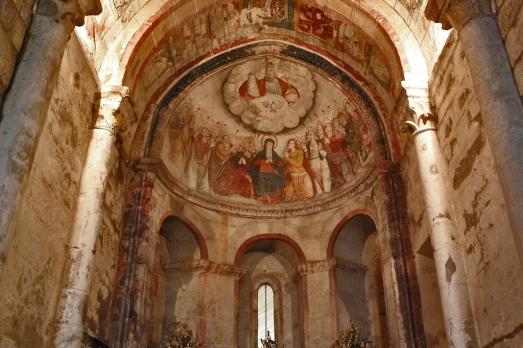
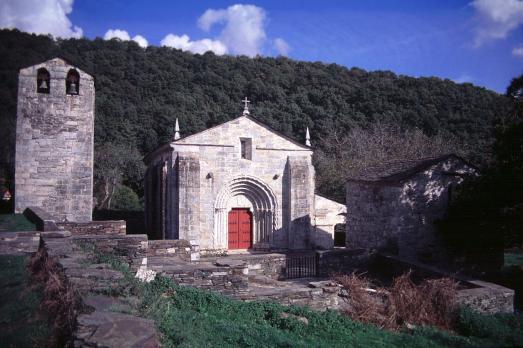
Church of San Pedro Fiz

Church of San Pedro Fiz

O Incio, ES

The Church of San Pedro Fiz or San Pedro Félix (in Galician: Igrexa Parroquial de San Pedro Fiz do Hospital) is a Romanesque church from the late 12th century that is located in the parish of Hospital, in the municipality of Incio, in Galicia, Spain.
Church of San Pietro a Corte

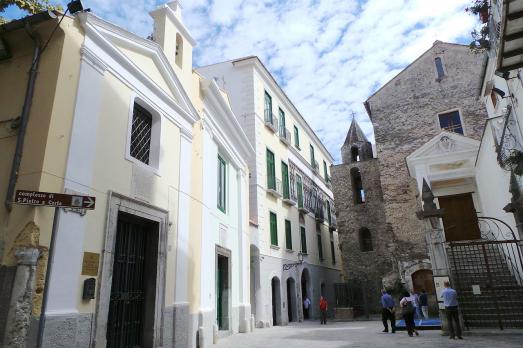
Church of San Pietro a Corte

Salerno, IT

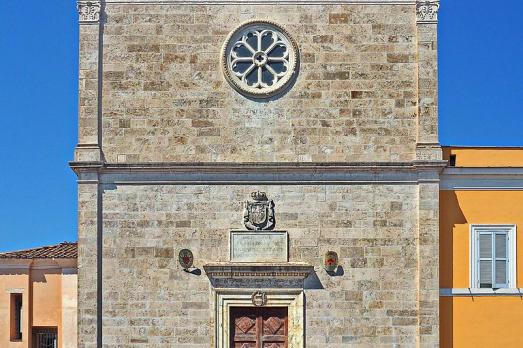
The church of San Pietro a Corte is part of an area in the historic centre of Salerno where archaeological evidence of the various historical changes since the first century AD is documented and visible. The church was founded in the Lombard period, in the 8th century, and has four main stratifications: the Roman thermal building, the early Christian church, the chapel of the Lombard palace and finally the medieval public palace.

Church of San Pietro Caveoso

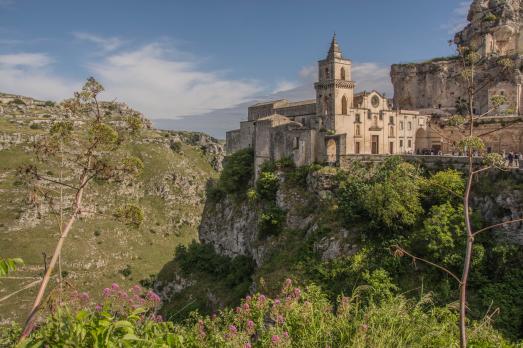
Church of San Pietro Caveoso

Matera, IT

The Church of Saints Peter and Paul, commonly known as the Church of San Pietro Caveoso, dates back to the end of the 13th century. The building has undergone modifications and renovations over the centuries, with the loss of many of its original construction features. In the 17th century, the church was completely renovated with the addition of the current façade and the construction of the bell tower, while the interior was enlarged with the addition of side chapels and the replacement of the original wooden ceiling with a tufa roof. In 1706, the church was reconsecrated, as a plaque indicates, and it was further modified: the bell tower cornice was added, the interior was covered with stuccoes and decorations and a false wooden ceiling was placed under the tuff roof.

Church of San Pietro in Montorio

Church of San Pietro in Montorio

Roma, IT

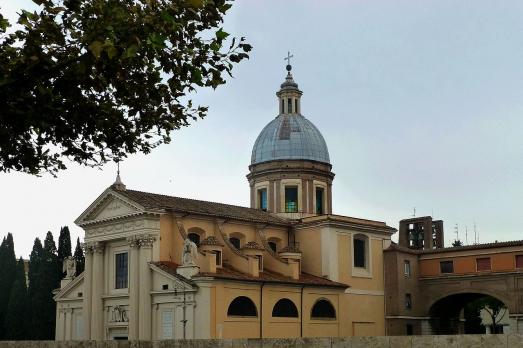
The church of San Pietro in Montorio was built from 1481 to 1500 on the place where ancient sacred buildings honoured St. Peter, who was allegedly crucified here. Due to its position on the border of the town, the complex suffered serious damage at the hands of the French of Napoleon III, who intervened in 1849. In 1876, the building was ceded by the Italian State to Spain and served as the seat of the Royal Academy of Spain in Rome.

Church of San Pietro

Cetara, IT

The church of San Pietro dates back to the end of the 10th century but its neoclassical structure is due to reconstruction in the 17th century. The bell tower, which sticks to the facade of the church, dates back to the 11th century. The church is typical of the Amalfi coast for its dome covered with coloured tiles.

Church of San Pietro

Church of San Pietro

Corniglia, IT

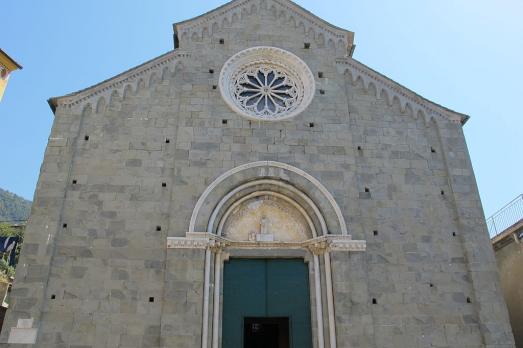
The parish church of San Pietro was built in the 14th century on the site of an ancient church probably built around the year 1000. The present building, in Gothic-Ligurian style, has a grey stone façade and a rose window in Carrara marble. The interior contains a 12th-century baptismal font.

Church of San Placido

Church of San Placido

Catania, IT

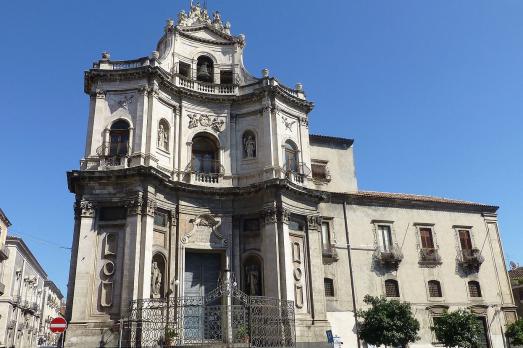
The church of San Placido dates back to 1409, the year in which the as yet unbuilt site was donated to Benedictine nuns. The construction took place on the ruins of an ancient pagan temple dedicated to the god Bacchus. The church was razed to the ground by the catastrophic earthquake in the Val di Noto in 1693, which destroyed the city of Catania. The new church was built just afterwards and was consecrated in 1723.

Church of San Rocco

Sondrio, IT

The "Don Bosco" Salesian Institute in Sondrio was founded in 1897; the first Salesians, sent by Blessed Michael Rua, Don Bosco's first successor, entered "San Rocco" on 24 September 1897. The specifics of the Salesian presence at the time (oratory, public church and boarding school) remained substantially unchanged until the our days.

Church of San Rocco

Church of San Rocco

Roma, IT

The church of San Rocco in Rome is a reconstruction of the 17th century. The sacristy, the construction of the dome, the insertion of the new chapel of the "Madonna delle Grazie", are all due to the architect Giovanni Antonio De Rossi (1616-1695). In the first half of the 18th century the chapels were embellished with marble decoration, while the façade was built in neoclassical style by the architect Giuseppe Valadier (1762-1839) in 1832.

Church of San Salvador (Camanzo)

Church of San Salvador (Camanzo)

Camanzo, ES

It was built in the first half of the 10th century, near the Castro de Castromao, as part of a monastery of Benedictine monks, which later became a monastery of nuns, and was dedicated to San Salvador.

Be inspired

Stupkalnis.lt

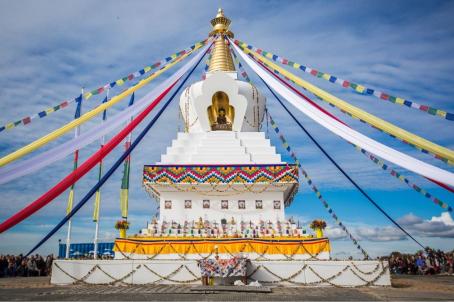
10 Buddhist stupas to discover in Europe

Stupas are symbols of enlightenment and peace that commemorate different stages of Buddha's life. Since the mid-20th century, thousands of stupas have begun to populate Europe. We have compiled some of the most impressive ones in this list.