Explore Religious Heritage Across Europe

Here you can search for a building to visit. You can use the map find destinations, or you can use the filters to search for a building based upon what different criteria.

Refine search

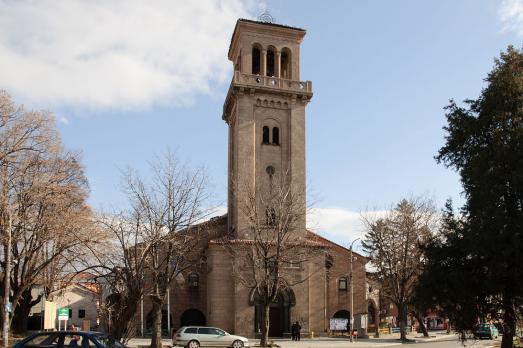
Dormition of the Virgin Mary, Pazardzhik

Dormition of the Virgin Mary, Pazardzhik

Pazardzhik, BG

The Dormition of the Virgin Mary is the largest preserved neo-Nazi church in the country. Built in 1836 - 1837, the church is famous for its iconostasis made of boiled walnut wood and carved with very artistic woodwork by the masters of Debar for ten years. The bell tower on the west façade was built in 1906 and completed in 1932-34.
Dorotea kyrka

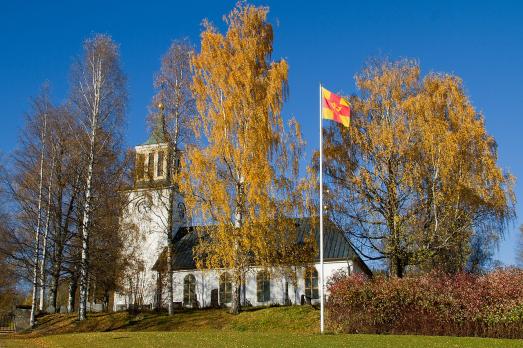
Dorotea kyrka

Dorotea, SE

The Dorotea Church is a 1934 reconstruction of an old church from the early 19th century. The new church was built in wood according to the plans of Evert Milles.

Dorpskerk

Domburg, NL

The church has a straight closed single-aisled nave and a tower with five sections with a staircase tower and a constricted spire. The tower, with a vaulted lower space, was built at the end of the 14th century. The 14th-century nave with choir and the 15th-century northern aisle burned down in 1848. During the reconstruction in 1849-'55, parts of the old masonry were used, including a 15th-century basket-arch gate with a rectangular surrounding drip moulding. The tower was restored in 1956, the church in 1963. The inventory includes late 18th-century psalm boards and a 19th-century pulpit.

Dorpskerk

Eelde, NL

The village church in Eelde is originally a Roman Catholic church, which was dedicated to St. Gangulphus. In 1598, stadtholder Willem Lodewijk ordered the conversion to the "reformed" religion by means of a "plakkaet". The name Reformed was not officially introduced until 1815 and the church continued to be called the Dutch Reformed Church until 2005. Since October 2005, the village church has been the church building where the Protestant community of Eelde-Paterswolde holds its weekly services. The Protestant community of Eelde-Paterwolde was created in 2005 from the merger between the Reformed community of Eelde and the Reformed Church of Paterswolde. In the single-nave church from the 14th century, tuff stones from an older church have been incorporated, particularly around the entrance. This earlier church stood on the same site and was already built in the 11th century. The church is built east-west and has a rectangular nave of 8.5 x 28 meters. A narrower, three-sided closed choir has been added to the east side. The stone choir vault was replaced by a wooden ceiling at the beginning of the 18th century. The wooden ceiling was painted with an allegorical representation of life and death, joy and mourning. (see photo below) The painting was probably made by Hermannus Collenius (1650-1723) The pulpit in the church dates from 1621. The wooden pews were replaced by chairs during the restoration of 1973. There are still four gentlemen's pews in the church. In the choir is the gentlemen's pew of the Oosterbroek manor house; against the north wall are two gentlemen's pews of the Lemferdinge manor house. It could not be determined to which manor house the fourth pew belonged. Furthermore, there is a wrought iron holder with a copper baptismal font in the church. During the restoration in 2000, the plasterwork in the church was completely removed and a consecration cross was revealed under one of the old layers of plaster. This cross dates from the pre-Reformation period and was restored and conditioned as far as possible. The cross is located on the wall next to the lord's pew opposite the pulpit. Until 1989, the church was equipped with a mechanical tower clock by H. Detgen in Groningen. Made in 1870. The clock was loaned to the Bell Foundry Museum in Heiligerlee in 1989.

Dorpskerk

Heinkenszand, NL

In the year 1406 Jan van Schengen built a chapel on his territory, which was dedicated to Saint Blasius. This facilitated local pastoral care. A pastor, Willem van Schengen, brother of the aforementioned Jan van Schengen, was attached to the chapel. On 30 December 1458 Heinkenszand became an independent parish and the Blasius chapel was elevated to parish church.

Dorpskerk

Nieuwegein, NL

Dutch Reformed Church. Built as village church of Vreeswijk. Oldest church building in present-day Nieuwegein. This church is listed as a National Monument of the Netherlands.

Dorpskerk

Bloemendaal, NL

Historic hall church with roof turret. Major restoration/renovation 2014-2015, which also included a new studio for Radio Bloemendaal.

Dorpskerk

Rockanje, NL

Reformed church. Single-nave nave with narrower, rectangular closed choir (16th century). Oak tie beams with corbels and key pieces with pear bead profiles. Inventory: simple pulpit (19th century?), four gentlemen's pews (18th century). Organ made in 1884 by Gebr. van Oeckelen.

Dorpskerk

Hoek van Holland, NL

Built as Dutch Reformed Church Now the PKN church in Hoek van Holland. Nice interbellum church with a tower crowned by a copper-green spire. Because the wooden predecessor of this church had fallen into disrepair due to storm and wind, it was decided to build a new one. This church was put into use on 8 December 1926.

Dorpskerk

Markelo, NL

The Martinuskerk in Markelo , is a Protestant church built in 1840 after the demolition of the older church.

Be inspired

Stupkalnis.lt

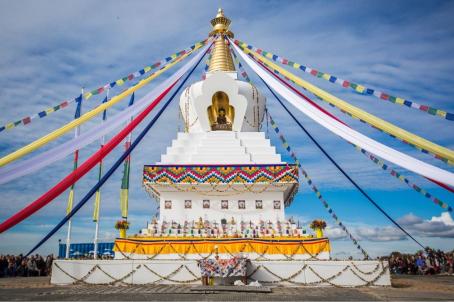
10 Buddhist stupas to discover in Europe

Stupas are symbols of enlightenment and peace that commemorate different stages of Buddha's life. Since the mid-20th century, thousands of stupas have begun to populate Europe. We have compiled some of the most impressive ones in this list.