Dorpskerk
De Glind, NL
Reformed Church on the Rudolphstichting. Interesting church with tower.

Here you can search for a building to visit. You can use the map find destinations, or you can use the filters to search for a building based upon what different criteria.
De Glind, NL
Reformed Church on the Rudolphstichting. Interesting church with tower.
Markelo, NL
The Martinuskerk in Markelo , is a Protestant church built in 1840 after the demolition of the older church.
Numansdorp, NL
Beautiful village church with charming, iconic tower. Characteristic Protestant interior, almost completely filled with pews. The "attention wall" with pulpit and baptismal font is located in the right (= southern) side of the interior. In that wall are also two colorful modern stained glass windows, on either side of the pulpit. This church is listed as a Municipal Monument of the Netherlands.
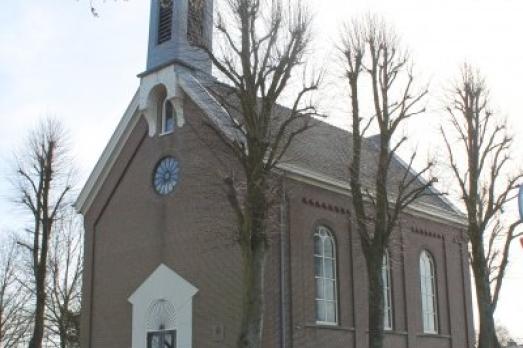
Abbenes, NL
The Dorpskerk in Abbenes is a charming village church dating from 1868. It is listed as a Municipal Monument of the Netherlands.
s-Gravenzande, NL
Reformed Church. Originally an octagonal building with a mansard roof and a domed roof turret, built in 1815-1816 to a design by A. Tollus. Founded by a donation from King William I. Enlarged in 1850 to a rectangular space, retaining three sides of the original design. The interior was thoroughly modernised in 1958. Organ with two manuals and pedal by Bakker and Timmenga (Leeuwarden) from 1899. Mechanical tower clock of French make, first quarter of the 20th century.
Nieuwegein, NL
Dutch Reformed Church. Built as village church of Vreeswijk. Oldest church building in present-day Nieuwegein. This church is listed as a National Monument of the Netherlands.
Eelde, NL
The village church in Eelde is originally a Roman Catholic church, which was dedicated to St. Gangulphus. In 1598, stadtholder Willem Lodewijk ordered the conversion to the "reformed" religion by means of a "plakkaet". The name Reformed was not officially introduced until 1815 and the church continued to be called the Dutch Reformed Church until 2005. Since October 2005, the village church has been the church building where the Protestant community of Eelde-Paterswolde holds its weekly services. The Protestant community of Eelde-Paterwolde was created in 2005 from the merger between the Reformed community of Eelde and the Reformed Church of Paterswolde. In the single-nave church from the 14th century, tuff stones from an older church have been incorporated, particularly around the entrance. This earlier church stood on the same site and was already built in the 11th century. The church is built east-west and has a rectangular nave of 8.5 x 28 meters. A narrower, three-sided closed choir has been added to the east side. The stone choir vault was replaced by a wooden ceiling at the beginning of the 18th century. The wooden ceiling was painted with an allegorical representation of life and death, joy and mourning. (see photo below) The painting was probably made by Hermannus Collenius (1650-1723) The pulpit in the church dates from 1621. The wooden pews were replaced by chairs during the restoration of 1973. There are still four gentlemen's pews in the church. In the choir is the gentlemen's pew of the Oosterbroek manor house; against the north wall are two gentlemen's pews of the Lemferdinge manor house. It could not be determined to which manor house the fourth pew belonged. Furthermore, there is a wrought iron holder with a copper baptismal font in the church. During the restoration in 2000, the plasterwork in the church was completely removed and a consecration cross was revealed under one of the old layers of plaster. This cross dates from the pre-Reformation period and was restored and conditioned as far as possible. The cross is located on the wall next to the lord's pew opposite the pulpit. Until 1989, the church was equipped with a mechanical tower clock by H. Detgen in Groningen. Made in 1870. The clock was loaned to the Bell Foundry Museum in Heiligerlee in 1989.
Capelle aan den Ijssel, NL
Historic village church with tower. The Reformed parish Dorpskerk is part of the Protestant community of Capelle aan den IJssel (PgC) within the Protestant Church in the Netherlands (PKN).
Koudekerk aan den Rijn, NL
Historic village church with tower. Tower 1400. The renovation and restoration of the interior of the PKN (former Dutch Reformed) village church was completed in the spring of 2007. There is now finally real heating in the church. It is hoped to give the church a multi-functional destination. The restoration of the exterior will start soon. Nickname: Bridge Church.
Olst, NL
Historic village church with tower, formerly dedicated to St. Willibrordus. This church is listed as a National Monument of the Netherlands.
new
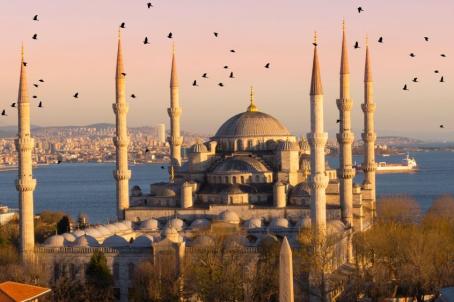
For a long time, Europe was ruled by powerful monarchies. Monarchy and religion have been connected since time immemorial. Here are 7 sites across Europe where royalty historically bent the knee to a higher power and received their crown.
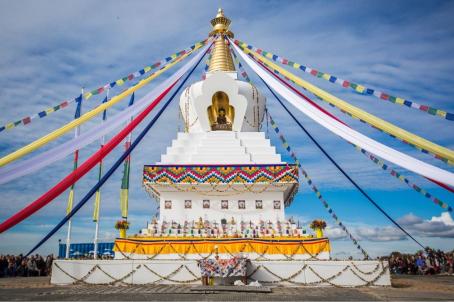
Stupas are symbols of enlightenment and peace that commemorate different stages of Buddha's life. Since the mid-20th century, thousands of stupas have begun to populate Europe. We have compiled some of the most impressive ones in this list.
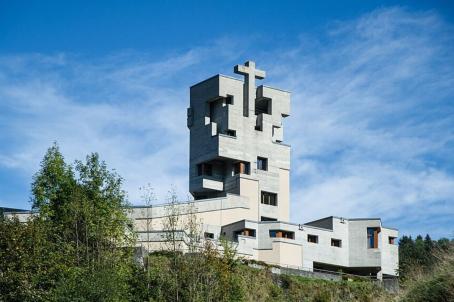
Walter Maria Förderer (1928–2006) was a Swiss architect and sculptor renowned for his neo-expressionist church designs in the 1960s. In this list we have compiled 6 of his church designs that seamlessly integrate religious and secular elements.

How is Religiana helping to conserve and promote Religious Heritage in Europe and why should you get involved?
Find out about Religiana
Are you a tourism organisation or religious heritage sites manager? Discover the advantages of becoming a partner.
See current partners
We can keep you up to date with the latest news from Religiana and religious heritage conservation across Europe.
Sign up to the FRH newsletter