Dorpskerk
Boijl, NL
Protestant church and bell tower of the Protestant Regional Community of Frieslands End.

Here you can search for a building to visit. You can use the map find destinations, or you can use the filters to search for a building based upon what different criteria.
Boijl, NL
Protestant church and bell tower of the Protestant Regional Community of Frieslands End.
Heinkenszand, NL
In the year 1406 Jan van Schengen built a chapel on his territory, which was dedicated to Saint Blasius. This facilitated local pastoral care. A pastor, Willem van Schengen, brother of the aforementioned Jan van Schengen, was attached to the chapel. On 30 December 1458 Heinkenszand became an independent parish and the Blasius chapel was elevated to parish church.
Hoek van Holland, NL
Built as Dutch Reformed Church Now the PKN church in Hoek van Holland. Nice interbellum church with a tower crowned by a copper-green spire. Because the wooden predecessor of this church had fallen into disrepair due to storm and wind, it was decided to build a new one. This church was put into use on 8 December 1926.
Nunspeet, NL
As early as the 12th century, a stone church must have stood on the site of the village church. Before that, there was probably a thatched wooden church. The church was dedicated to Saint Anthony. On 6 June 1855, the church burned down. A large fire destroyed part of the church and also a large number of the village houses, only a part of the church tower was preserved. In 1857, new construction began. In 1949, three new bells were cast, replacing the two previous bells. They weighed 650, 371 and 260 kilos respectively and sounded in G sharp, B and C sharp. The middle bell was replaced in 1961 after a crack. The inscriptions read according to bells:
Moordrecht, NL
Dutch Reformed Church. Spacious, single-nave cruciform church in Gothic style, built in 1657. Five-sided closed choir, which is narrower than the nave. Wooden barrel vaults with tie beams and corbels. Church restored 1957-1967. The inventory includes: pulpit, 17th century with copper lectern; two benches with arch panels, 17th century; four psalm boards, end of 18th century; four copper chandeliers, 18th century, one of which bears the date 1753. Organ with parapet with richly carved case in Louis XIV shapes. The organ with main work and positif, was made in 1773 by JJ Delahaye for the Walloon Church in Gouda and moved to Moordrecht in 1818. This church is listed as a National Monument of the Netherlands.
Markelo, NL
The Martinuskerk in Markelo , is a Protestant church built in 1840 after the demolition of the older church.
Santpoort-Noord, NL
The village church was also the first 'real' church in Santpoort in terms of size. Dutch Reformed, now PKN. Nowadays the church also offers shelter to all kinds of cultural activities. The first version of the village church dates from 1844. A slender and charming building that was created on the initiative of the miller. In 1916 the church burned down. The story goes that a drunken homeless person, who was looking for shelter from the cold, accidentally knocked over one of the two stoves, after which the church caught fire. There was almost nothing left. A year later, in 1917, the current church could be consecrated on the same spot. With money from the insurance, collections and generous gifts from wealthy Santpoorters from North and South. The contours of the burnt down church were adopted: a hall church with a tower in the middle, the roofs covered with slates. But the style that the Bloemendaal architects J. Mulder and JA van Asdonk gave the building was no longer light and charming but solid, quasi-Romanesque. The church got a sturdy square tower with a matching spire and semi-circular arch spans of windows, sound holes and portal. Funny thing is that the clock, which at that time still served as a watch for ordinary people, is not placed in the middle of the tower but on a corner.
Eelde, NL
The village church in Eelde is originally a Roman Catholic church, which was dedicated to St. Gangulphus. In 1598, stadtholder Willem Lodewijk ordered the conversion to the "reformed" religion by means of a "plakkaet". The name Reformed was not officially introduced until 1815 and the church continued to be called the Dutch Reformed Church until 2005. Since October 2005, the village church has been the church building where the Protestant community of Eelde-Paterswolde holds its weekly services. The Protestant community of Eelde-Paterwolde was created in 2005 from the merger between the Reformed community of Eelde and the Reformed Church of Paterswolde. In the single-nave church from the 14th century, tuff stones from an older church have been incorporated, particularly around the entrance. This earlier church stood on the same site and was already built in the 11th century. The church is built east-west and has a rectangular nave of 8.5 x 28 meters. A narrower, three-sided closed choir has been added to the east side. The stone choir vault was replaced by a wooden ceiling at the beginning of the 18th century. The wooden ceiling was painted with an allegorical representation of life and death, joy and mourning. (see photo below) The painting was probably made by Hermannus Collenius (1650-1723) The pulpit in the church dates from 1621. The wooden pews were replaced by chairs during the restoration of 1973. There are still four gentlemen's pews in the church. In the choir is the gentlemen's pew of the Oosterbroek manor house; against the north wall are two gentlemen's pews of the Lemferdinge manor house. It could not be determined to which manor house the fourth pew belonged. Furthermore, there is a wrought iron holder with a copper baptismal font in the church. During the restoration in 2000, the plasterwork in the church was completely removed and a consecration cross was revealed under one of the old layers of plaster. This cross dates from the pre-Reformation period and was restored and conditioned as far as possible. The cross is located on the wall next to the lord's pew opposite the pulpit. Until 1989, the church was equipped with a mechanical tower clock by H. Detgen in Groningen. Made in 1870. The clock was loaned to the Bell Foundry Museum in Heiligerlee in 1989.
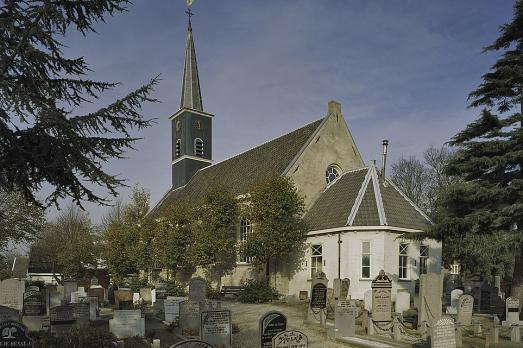
Akersloot, NL
The Dorpskek in Akersloot was originally erected in the 13th century on the foundations of a Romanesque church. The current building is the reconstruction of 1837 as the previous building had to be demolished due to its deterioration.
Nieuw- en Sint Joosland, NL
In 1991 the church was refurbished. The heating was replaced. The wooden floor was replaced by a stone one and the wooden benches by chairs. In addition, a kitchen was fitted out and the church was made suitable for multifunctional use. Financially, the job was made possible thanks to the willingness to sacrifice of the Nieuwlanders, including people who were not members of our congregation. 36 guilders were raised per inhabitant. In addition, many volunteers helped out, which kept the costs down. The clock faces and hands of the tower were overhauled in the period October/November 1991. In 1994 the civil authorities restored the church tower.
new
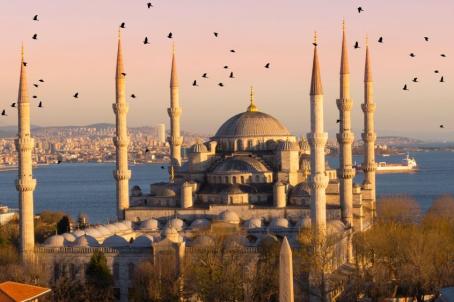
For a long time, Europe was ruled by powerful monarchies. Monarchy and religion have been connected since time immemorial. Here are 7 sites across Europe where royalty historically bent the knee to a higher power and received their crown.
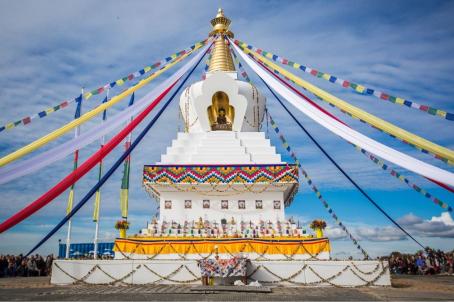
Stupas are symbols of enlightenment and peace that commemorate different stages of Buddha's life. Since the mid-20th century, thousands of stupas have begun to populate Europe. We have compiled some of the most impressive ones in this list.
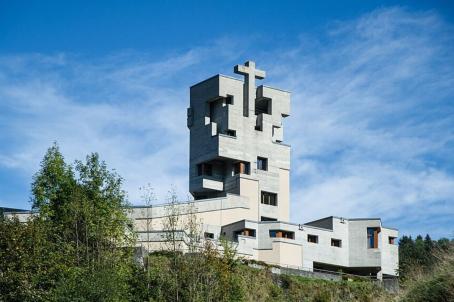
Walter Maria Förderer (1928–2006) was a Swiss architect and sculptor renowned for his neo-expressionist church designs in the 1960s. In this list we have compiled 6 of his church designs that seamlessly integrate religious and secular elements.

How is Religiana helping to conserve and promote Religious Heritage in Europe and why should you get involved?
Find out about Religiana
Are you a tourism organisation or religious heritage sites manager? Discover the advantages of becoming a partner.
See current partners
We can keep you up to date with the latest news from Religiana and religious heritage conservation across Europe.
Sign up to the FRH newsletter