Explore Religious Heritage Across Europe

Here you can search for a building to visit. You can use the map find destinations, or you can use the filters to search for a building based upon what different criteria.

Refine search

Dorpskerk

Gouderak, NL

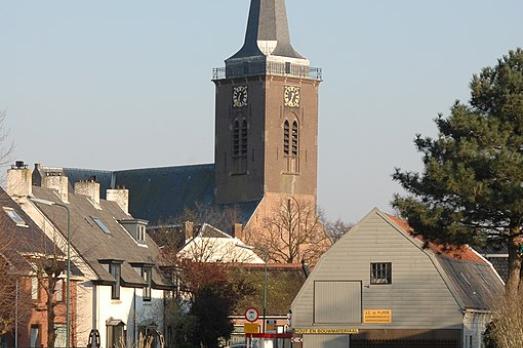
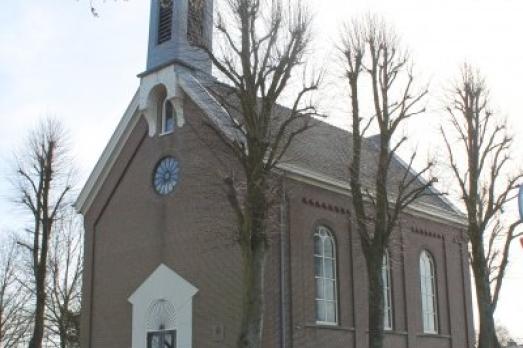
The church, built in 1658, is made of yellow IJssel brick and dated 1658 in the red brick facade. The two-pointed stars above it, also in red brick, refer to the coat of arms of Gouderak. On the west side, the masonry projects at the location of the tower. The roof turret has a wooden superstructure covered with slates and is crowned by a spire. The church was renovated in 1851. In front of the entrance is a portal from 1954 in an adapted style. The church has pointed arch windows on a dripstone. Between the windows are once cut buttresses with sloping covering. The interior of the church has a wooden barrel vault with wooden tie beams on corbel frames from 1851. They have profiled key pieces of a 17th-century type.
Dorpskerk

Biggekerke, NL

The church of Biggekerke is known to have been founded before 1247 as a daughter church of the Westmonster church in Middelburg. Until 1453, there were even two pastors' positions attached to it. During the Reformation, it also caused quite a stir here. The pastor at the time, Bernard Donder, was a convinced Calvinist and renounced the Roman Catholic church in 1566. Since then, he has also preached the Reformation in Biggekerke, something for which he had to pay with imprisonment. After being released and imprisoned several times, he fled to England or Germany. After this, a period began in which people could only meet secretly and in small numbers, in someone's house. But then, when Middelburg declared itself loyal to Orange, the Reformation could develop. At that time, there was still the problem that there were too few pastors, but in 1583, the classis of Walcheren assigned the first pastor to Biggekerke, the Rev. J. van Aecken.

Dorpskerk

Koudekerk aan den Rijn, NL

Historic village church with tower. Tower 1400. The renovation and restoration of the interior of the PKN (former Dutch Reformed) village church was completed in the spring of 2007. There is now finally real heating in the church. It is hoped to give the church a multi-functional destination. The restoration of the exterior will start soon. Nickname: Bridge Church.

Dorpskerk

Dorpskerk

Abbenes, NL

The Dorpskerk in Abbenes is a charming village church dating from 1868. It is listed as a Municipal Monument of the Netherlands.

Dorpskerk

Goudriaan, NL

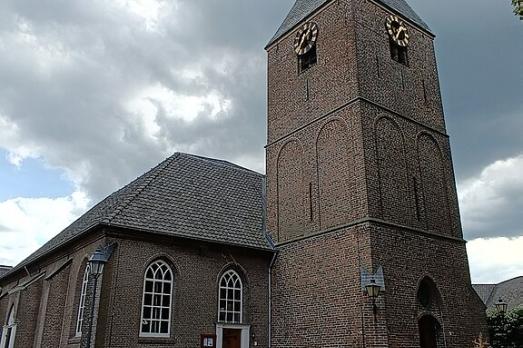
Dutch Reformed Church. Late Gothic village church with single-aisled nave and deep, three-sided closed choir. Heavy brick tower on the west side, decorated by series of narrow, blind niches and crowned by an eight-sided, constricted spire.

Dorpskerk

Eelde, NL

The village church in Eelde is originally a Roman Catholic church, which was dedicated to St. Gangulphus. In 1598, stadtholder Willem Lodewijk ordered the conversion to the "reformed" religion by means of a "plakkaet". The name Reformed was not officially introduced until 1815 and the church continued to be called the Dutch Reformed Church until 2005. Since October 2005, the village church has been the church building where the Protestant community of Eelde-Paterswolde holds its weekly services. The Protestant community of Eelde-Paterwolde was created in 2005 from the merger between the Reformed community of Eelde and the Reformed Church of Paterswolde. In the single-nave church from the 14th century, tuff stones from an older church have been incorporated, particularly around the entrance. This earlier church stood on the same site and was already built in the 11th century. The church is built east-west and has a rectangular nave of 8.5 x 28 meters. A narrower, three-sided closed choir has been added to the east side. The stone choir vault was replaced by a wooden ceiling at the beginning of the 18th century. The wooden ceiling was painted with an allegorical representation of life and death, joy and mourning. (see photo below) The painting was probably made by Hermannus Collenius (1650-1723) The pulpit in the church dates from 1621. The wooden pews were replaced by chairs during the restoration of 1973. There are still four gentlemen's pews in the church. In the choir is the gentlemen's pew of the Oosterbroek manor house; against the north wall are two gentlemen's pews of the Lemferdinge manor house. It could not be determined to which manor house the fourth pew belonged. Furthermore, there is a wrought iron holder with a copper baptismal font in the church. During the restoration in 2000, the plasterwork in the church was completely removed and a consecration cross was revealed under one of the old layers of plaster. This cross dates from the pre-Reformation period and was restored and conditioned as far as possible. The cross is located on the wall next to the lord's pew opposite the pulpit. Until 1989, the church was equipped with a mechanical tower clock by H. Detgen in Groningen. Made in 1870. The clock was loaned to the Bell Foundry Museum in Heiligerlee in 1989.

Dorpskerk

Dorpskerk

Almen, NL

Brick church from the 14th century. The tower was originally separate from the church and is somewhat older. The church has a Romanesque Bentheimer stone baptismal font. Under the choir lie several mummies. Enlarged in 1849, choir built in 1915.

Dorpskerk

Dorpskerk

Abcoude, NL

The Dorpskerk in Abcoude is a historic village church dating from the 14th century. It is listed as a National Monument of the Netherlands. It is currently used as a place of worship by the Protestant Church.

Dorpskerk

Spijkenisse, NL

Dutch Reformed Church. Late Gothic village church, tower mid 15th century, choir and transept 15th century B, nave ca. 1521, as evidenced by the stone in the western facade. Choir with five-sided closure, wide, single-aisled nave, barrel vaults on tie beams. in the north and south facades of the nave Gothic gates in profiled natural stone frames. Inventory: pulpit with baptismal fence and lord's pew 17th century. Tombstones 16th and 17th century. Bell tower with bell by S. Butendiic, 1481, diam. 95.8 cm and a bell by Petit and Gebr. Edelbrock /Eijsbouts, 1930, diam. 74.4 cm. Mechanical tower clock by B. Eijsbouts from 1902, equipped with electric winding.

Dorpskerk

Boijl, NL

Protestant church and bell tower of the Protestant Regional Community of Frieslands End.

Be inspired

Stupkalnis.lt

10 Buddhist stupas to discover in Europe

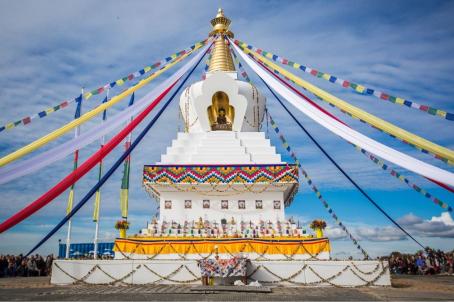
Stupas are symbols of enlightenment and peace that commemorate different stages of Buddha's life. Since the mid-20th century, thousands of stupas have begun to populate Europe. We have compiled some of the most impressive ones in this list.